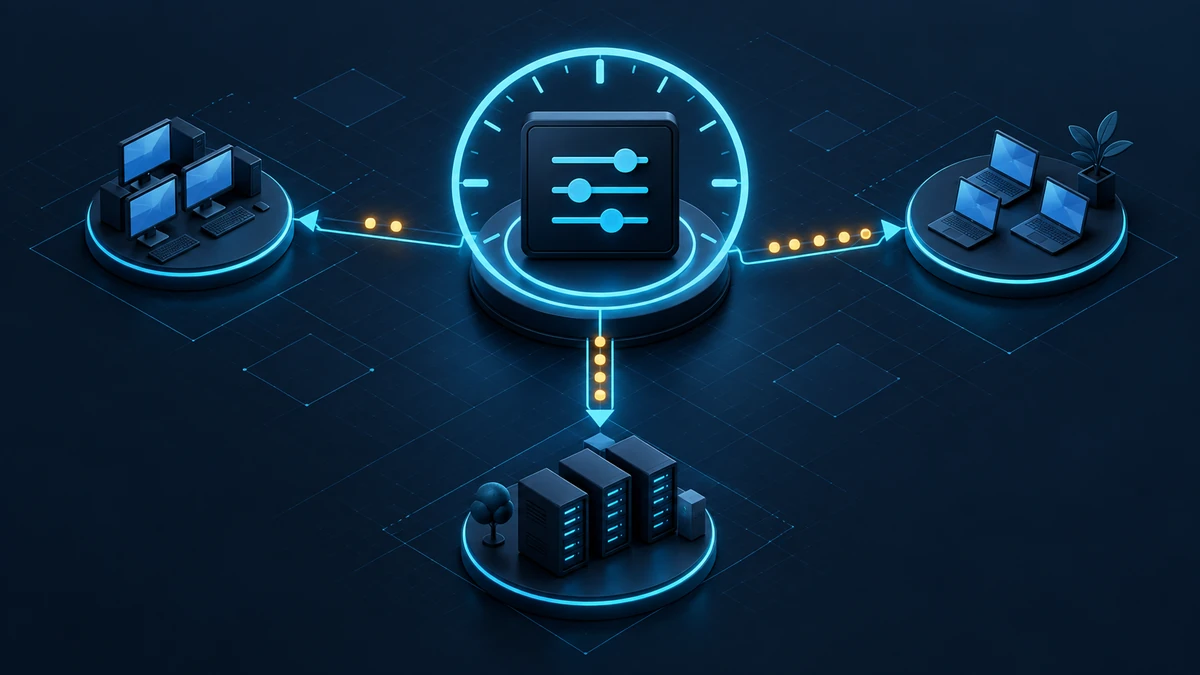
A linked GPO is not yet an effective control. Check refresh, replication and restart requirements separately, roll out changes in stages and verify the resulting state on each endpoint.
Active DirectoryAD-HardeningGroup PolicyGPOConfiguration Management
RMM tools are privileged admin paths. Sustainable control separates Tier 0, hardens approved services, and blocks shadow access through application and network controls.
Active DirectoryAD HardeningRMMApplication ControlPrivileged AccessIncident Response
AD's built-in complexity rule is only a baseline. Sufficient length, targeted fine-grained password policies and a controlled banned-password rollout create a stronger, measurable password standard.
Active DirectoryHardeningPassword PolicyFine-Grained Password PoliciesMicrosoft EntraIdentity Security
A disabled policy value does not remove passwords that were already stored reversibly. Checking domain policy, fine-grained password policies and user options, followed by controlled password rotation, removes the exposure.
Active DirectoryHardeningPasswordsFine-Grained Password PoliciesService AccountsCredential Protection
PowerShell cannot be secured reliably with an execution policy or by blocking one executable. Application control, separate admin paths, JEA and protected telemetry create an enforceable execution boundary.
Active DirectoryHardeningPowerShellApplication ControlLeast PrivilegeJEA
Unauthenticated SMB access turns a legacy share into a client-side security exception. Explicitly block insecure guest logons, replace guest access with named identities, and contain unavoidable transitions.
Active DirectoryAD HardeningSMBGuest LogonsGroup PolicyWindows Security
A domain join is a privileged provisioning operation. Separate roles, narrow OU rights, protected pre-staging and reuse workflows, and dependable telemetry replace broadly privileged join accounts.
Active DirectoryHardeningDomain JoinComputer AccountsLeast PrivilegeWindows Security
SPNs are normal; the risk is a requestable service ticket combined with a weak secret and excessive privileges. gMSA, rotation, least privilege and ticket monitoring create the controlled target state.
Active DirectoryHardeningKerberoastingService AccountsgMSAKerberos
Signed does not automatically mean safe for kernel drivers. The Microsoft Vulnerable Driver Blocklist closes known driver paths, but enterprise deployment still needs inventory, piloting, telemetry and a dependable recovery path.
Active DirectoryHardeningVulnerable Driver BlocklistApp Control for BusinessWindows Security
Cached domain logons keep devices usable without a Domain Controller, but they also enlarge the local verifier set. A device-class-specific Group Policy baseline reduces the slots without locking out mobile users or recovery paths.
Active DirectoryHardeningCached Domain LogonsGroup PolicyWindows Authentication
Windows clients rarely need unrestricted inbound reachability from other endpoints. A staged Group Policy baseline with default inbound blocking, narrowly scoped exceptions and central logging turns the local firewall into an enforceable boundary without disrupting normal operations.
Active DirectoryHardeningWindows FirewallLateral MovementGroup Policy
AppLocker reduces the freely executable software surface on Windows systems. A defensible rollout starts in audit mode, separates device classes and rule collections, and enforces a maintainable allowlist only after the telemetry has been reviewed.
Active DirectoryHardeningAppLockerApplication ControlGroup Policy
Domain members normally rotate their machine account password every 30 days. A sound AD baseline preserves that behavior, detects exceptions and treats stale passwords as lifecycle evidence rather than an automatic trust failure.
Active DirectoryHardeningMachine AccountsGroup PolicyNetlogon
Microsoft Entra Connect links on-premises Active Directory and Entra ID through powerful accounts, rules and write paths. The sync server therefore belongs in the control plane, with narrow administration, minimum permissions, guarded exports and tested recovery.
Active DirectoryHardeningMicrosoft Entra IDHybrid IdentityTier 0
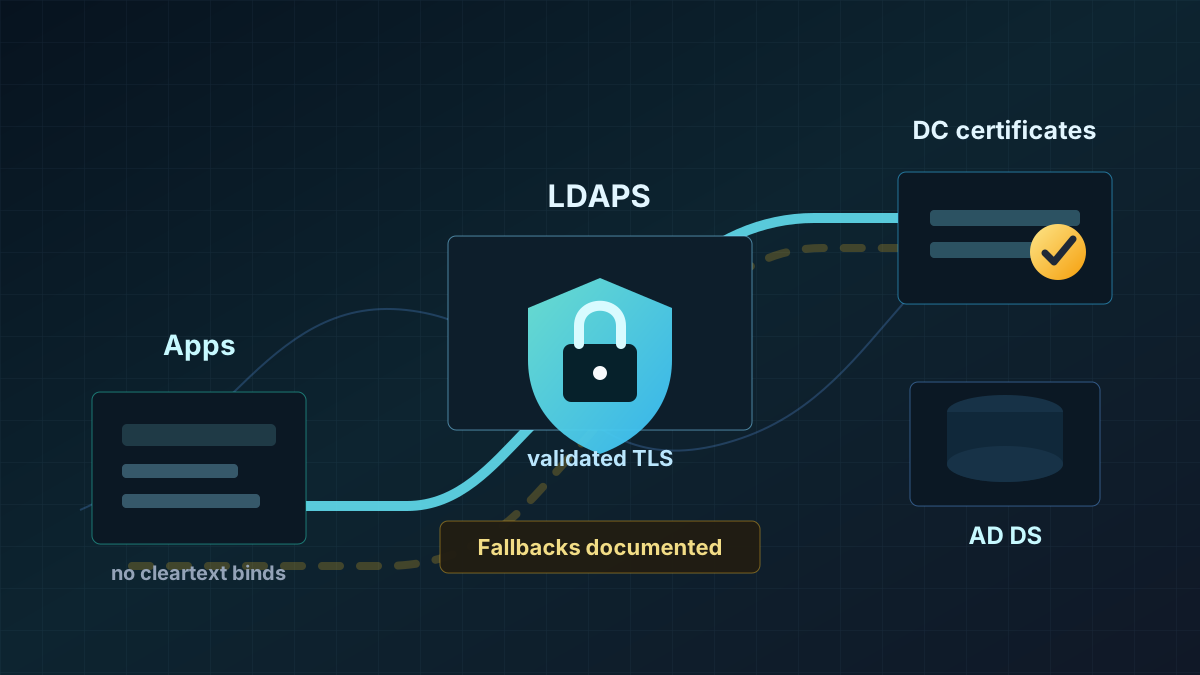
LDAPS is not a single port switch. A reliable rollout needs valid Domain Controller certificates, clean trust chains, tested clients and a clear decision on which LDAP fallbacks remain acceptable.
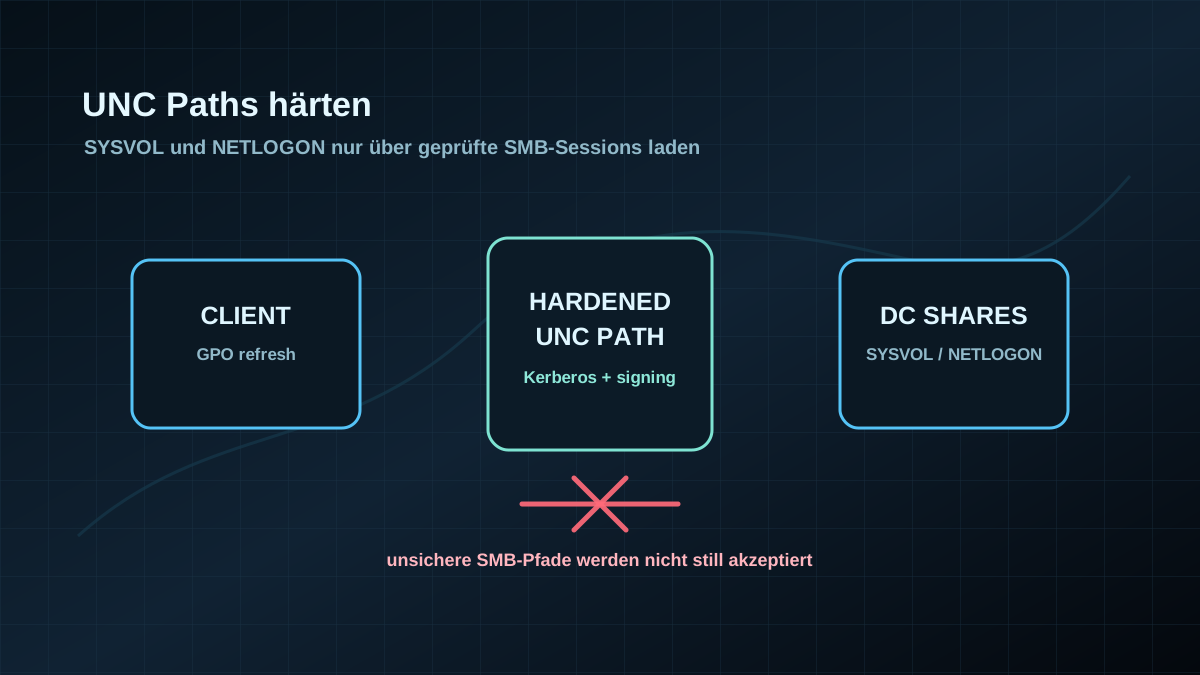
SYSVOL and NETLOGON look ordinary, but they are critical AD paths. Hardened UNC Paths enforce Kerberos-based server authentication and SMB integrity instead of letting Group Policy load across weak paths.
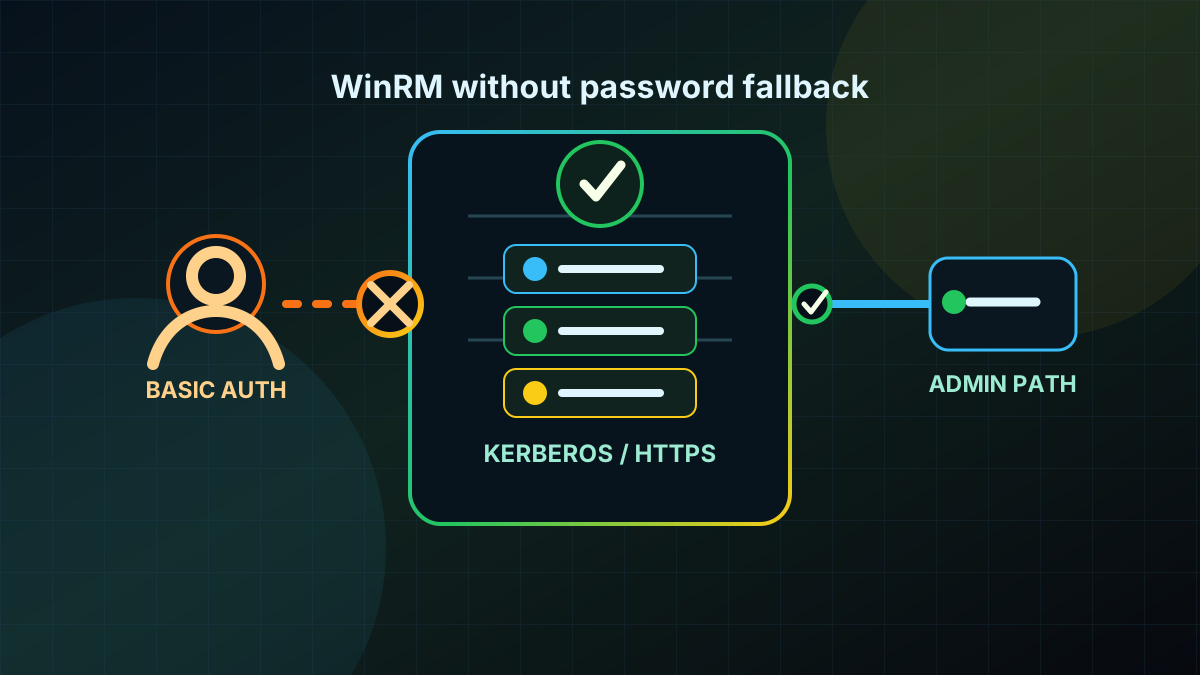
WinRM is useful for Windows administration, but Basic Auth and unencrypted fallbacks do not belong in an AD baseline. Kerberos, narrow listeners, no stored admin credentials and clear exceptions are the better operating state.
Active DirectoryHardeningWinRMPowerShell RemotingKerberos
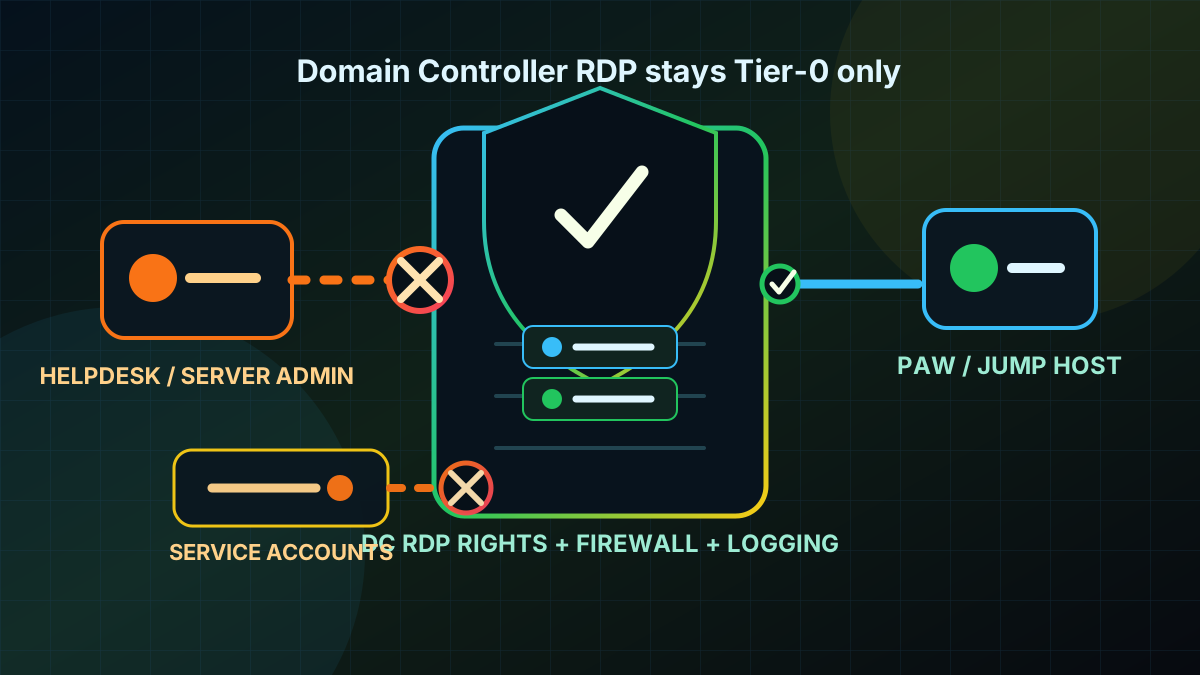
Domain Controllers are not normal administration servers. RDP should only be possible for clearly defined Tier-0 administrators, from controlled networks and with visible logging.
Active DirectoryHardeningDomain ControllersRDPTier 0
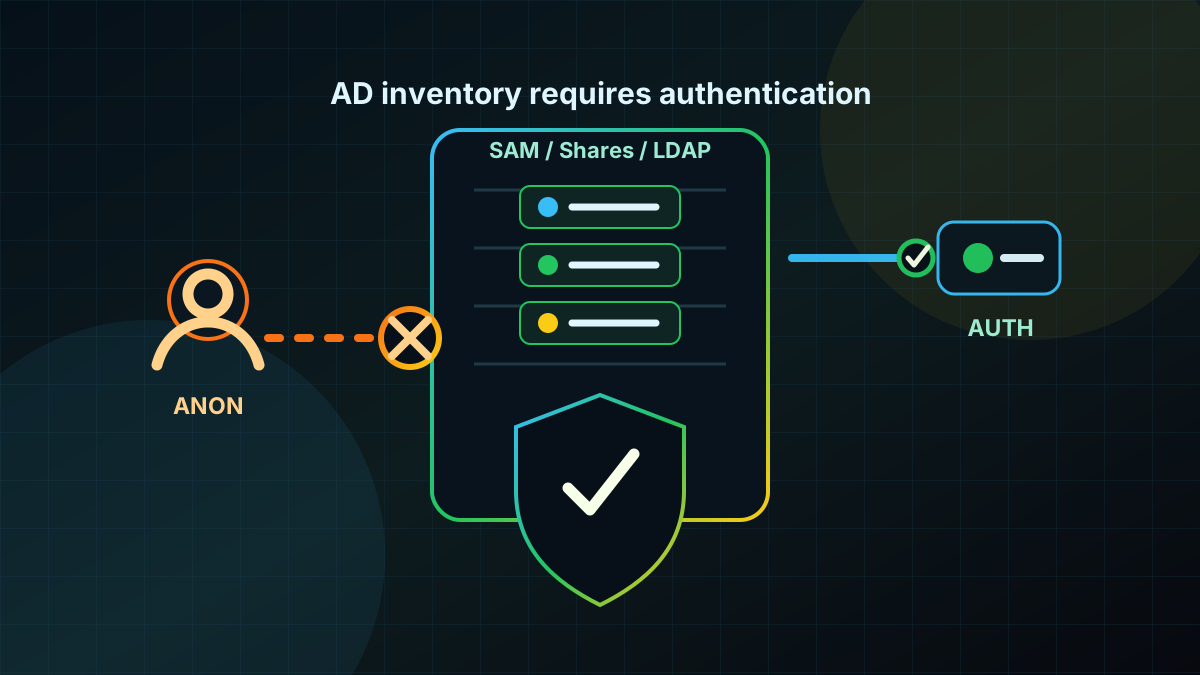
Anonymous queries in older Windows environments often reveal more inventory than expected. A clean baseline limits null sessions, SAMR, named pipes, shares and guest paths without blindly breaking legacy systems.
Active DirectoryHardeningAnonymous EnumerationSAMRSMB
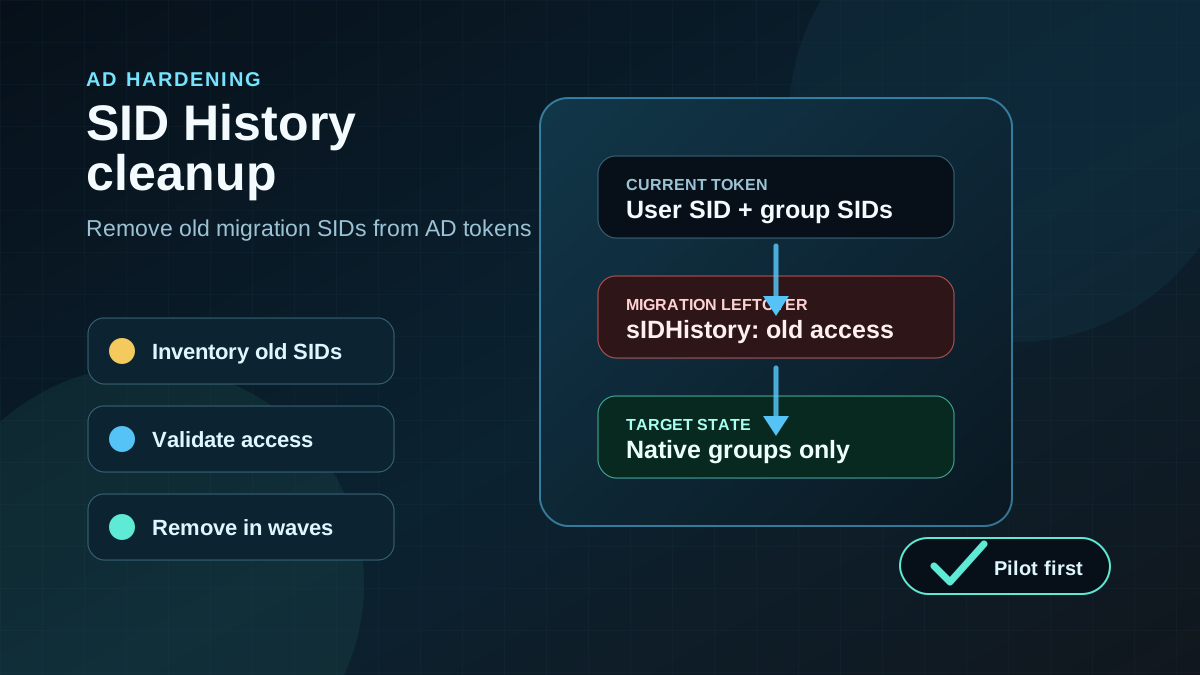
sIDHistory is useful during domain migrations, but often remains as a quiet authorization anchor afterwards. A clean removal needs inventory, owners, access testing and a controlled pilot.
Active DirectoryHardeningSID HistoryMigrationTier 0
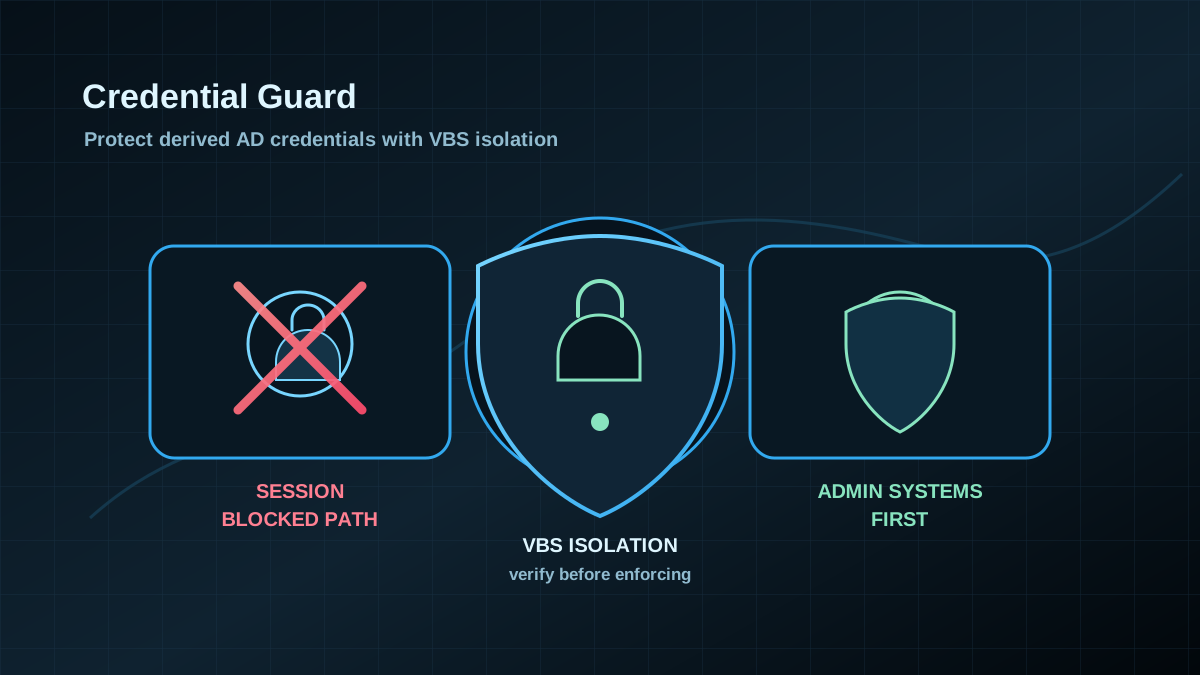
Credential Guard protects NTLM hashes and Kerberos material from normal compromised Windows sessions. Start with admin and Tier-0 systems, then roll out with hardware, driver and SSO validation.
Active DirectoryHardeningCredential GuardWindowsTier 0
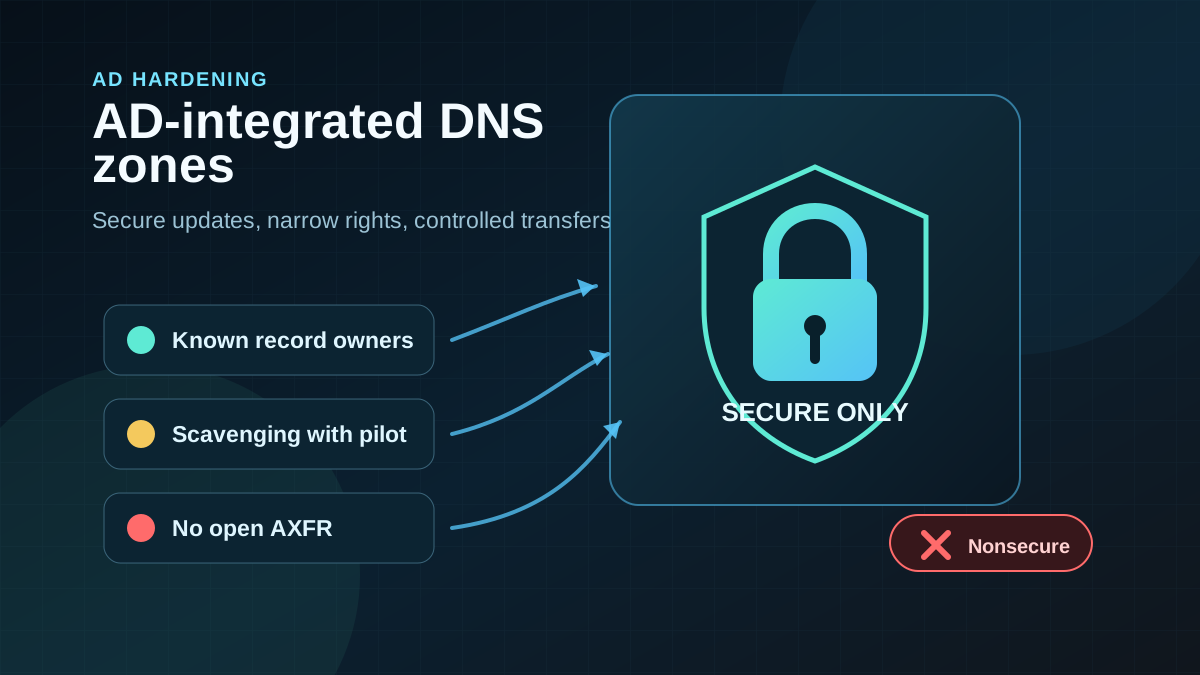
AD DNS decides how systems find Domain Controllers, services, and administrative paths. Secure updates, clean permissions, scavenging, and controlled zone transfers belong in every AD hardening program.
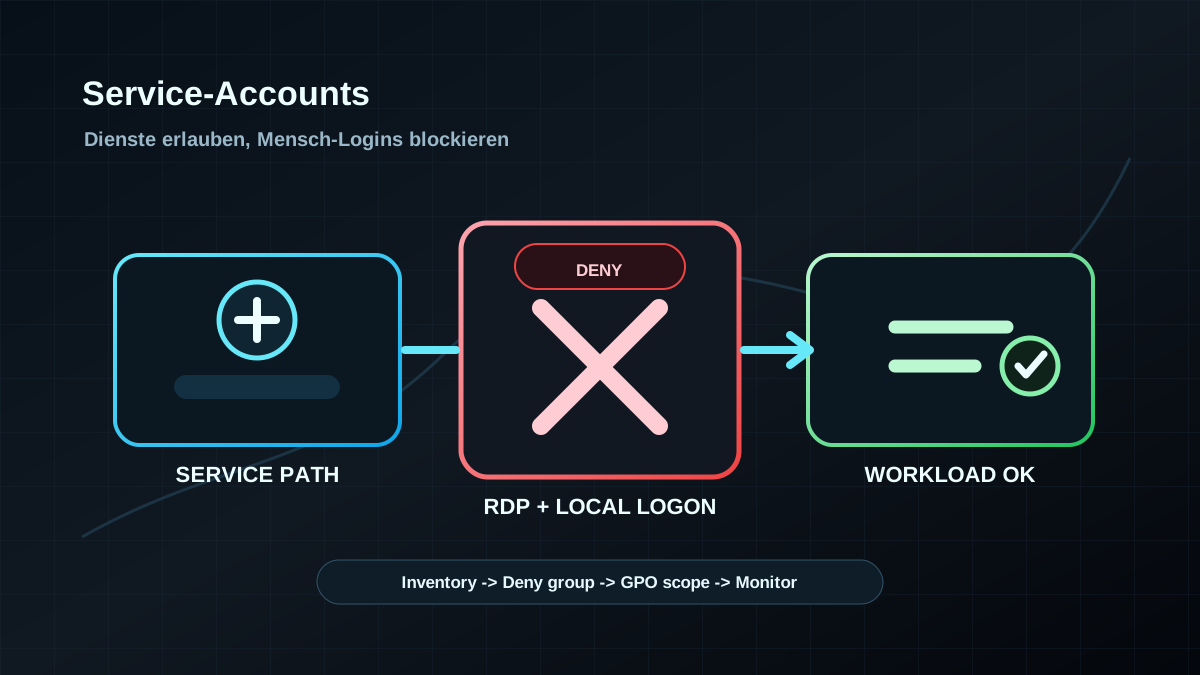
Service accounts should run workloads, not become convenient shared users. Interactive sign-in, RDP, and local logon should be blocked in a controlled way without breaking legitimate service and batch workloads.
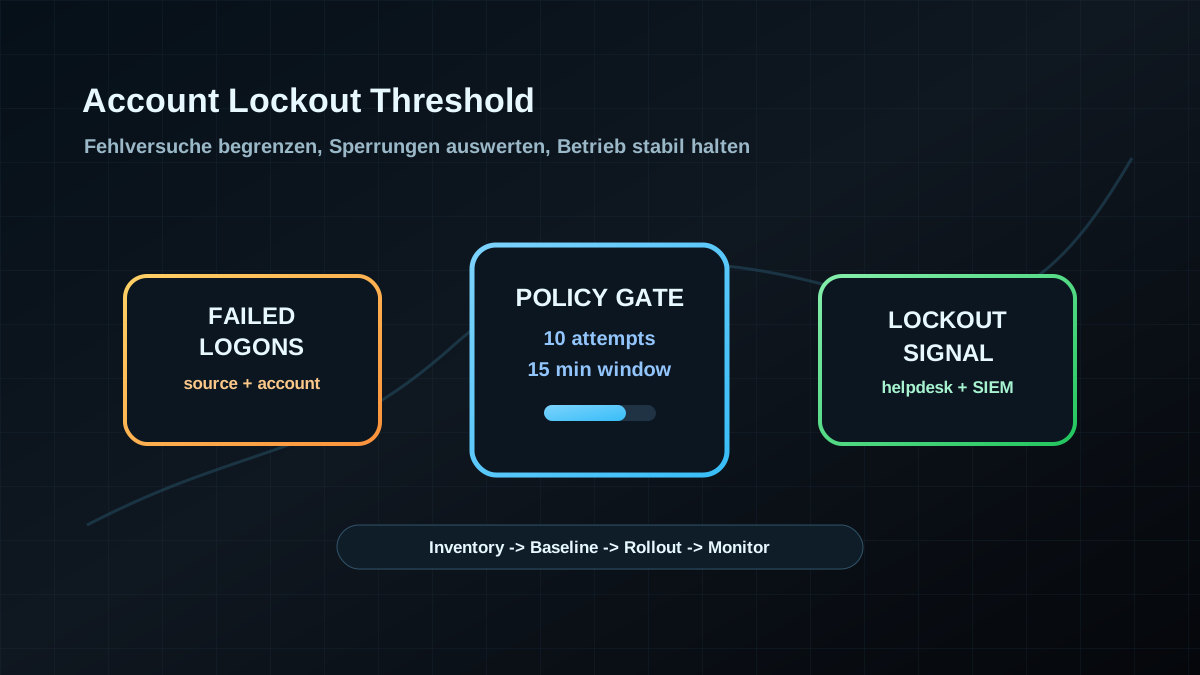
The Account Lockout Threshold is not a complete spray defense. Set well, it limits online guessing, creates usable signals, and exposes stale credential problems. Set badly, it locks the business out.
Active DirectoryHardeningAccount LockoutPassword SprayingGPO
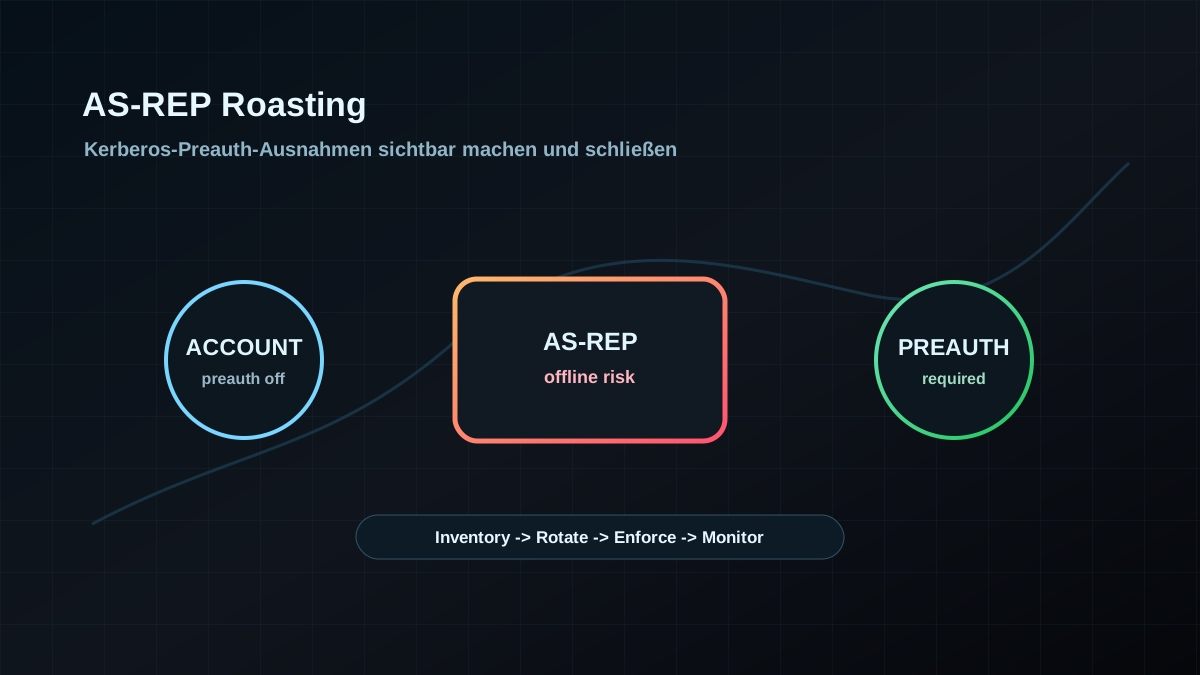
AS-REP Roasting usually starts with a simple account setting: Kerberos pre-authentication is not required. The fix is technically small, but it needs ownership, testing, and drift control.
Active DirectoryHardeningKerberosAS-REP RoastingPreauth
Coerce attacks are rarely fixed by one setting. The real question is which systems can still trigger NTLM, SMB, RPC or HTTP authentication unexpectedly.
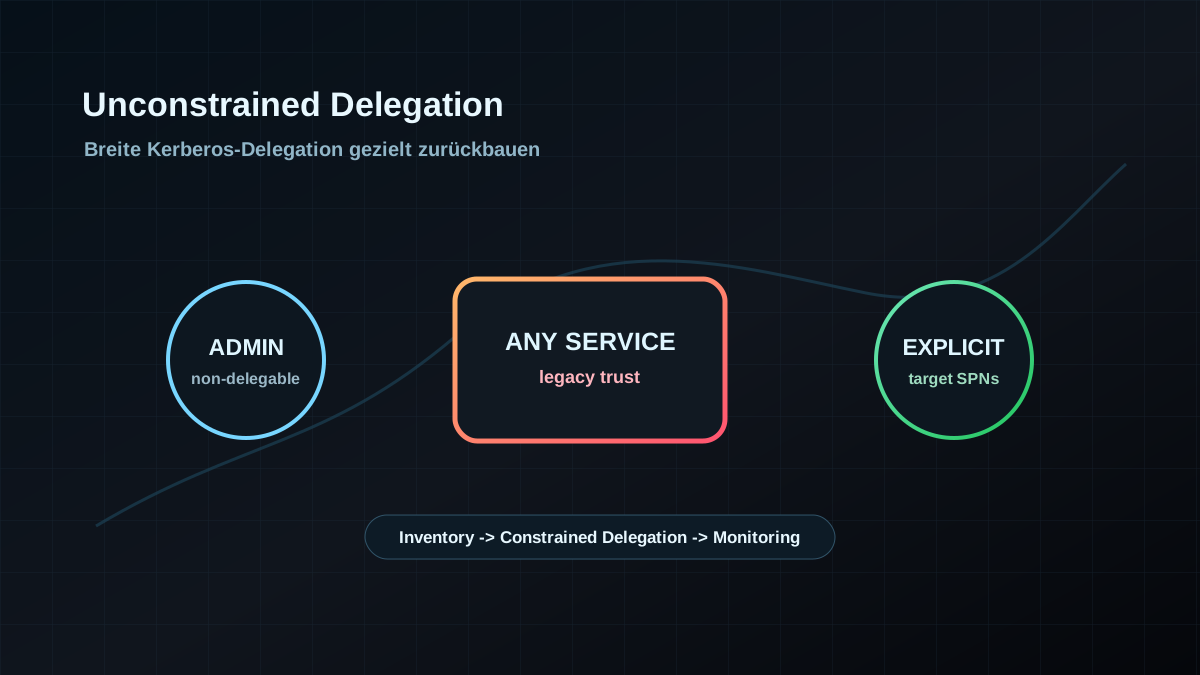
Unconstrained Delegation is often a historical convenience setting for old double-hop scenarios. In modern AD environments, it should be practically absent outside domain controllers.
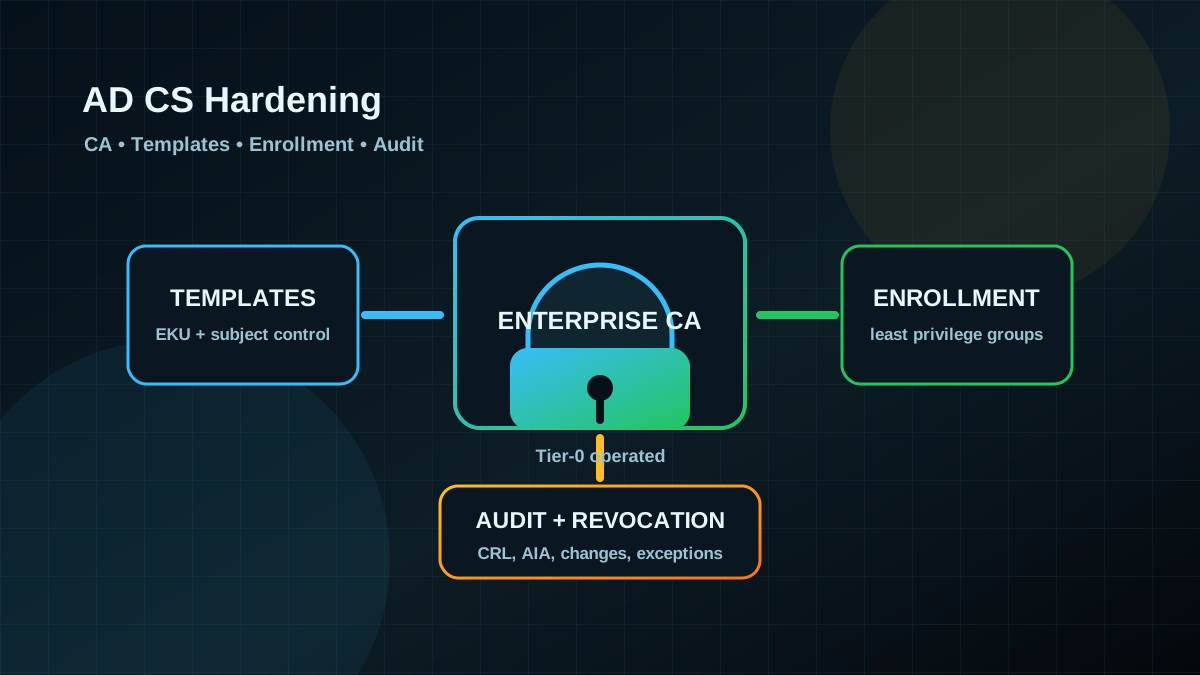
AD CS indirectly controls who can authenticate as whom. If templates, enrollment rights and CA operations are unmanaged, PKI can become a domain takeover path.
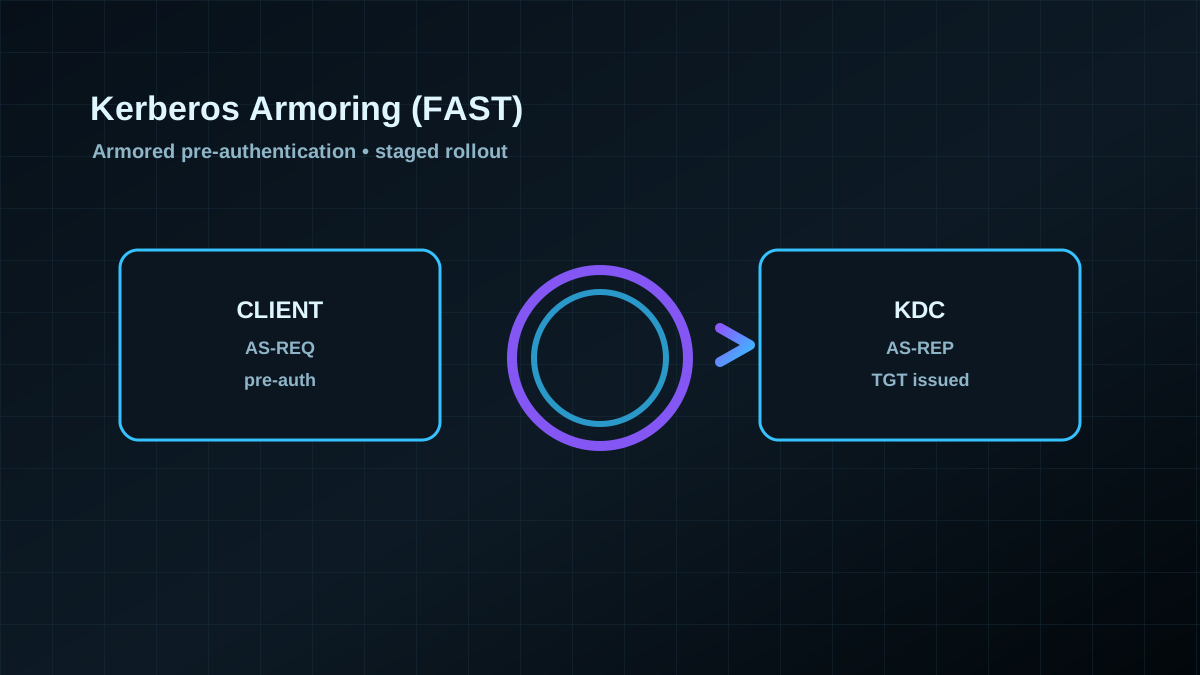
Kerberos Armoring (FAST) hardens Kerberos pre-authentication and reduces exposure to certain offline and downgrade paths. The value is real — but only with dependency visibility, staged rollout, and well-tested rollback per scope.
Active DirectoryHardeningKerberosFASTAuthentication
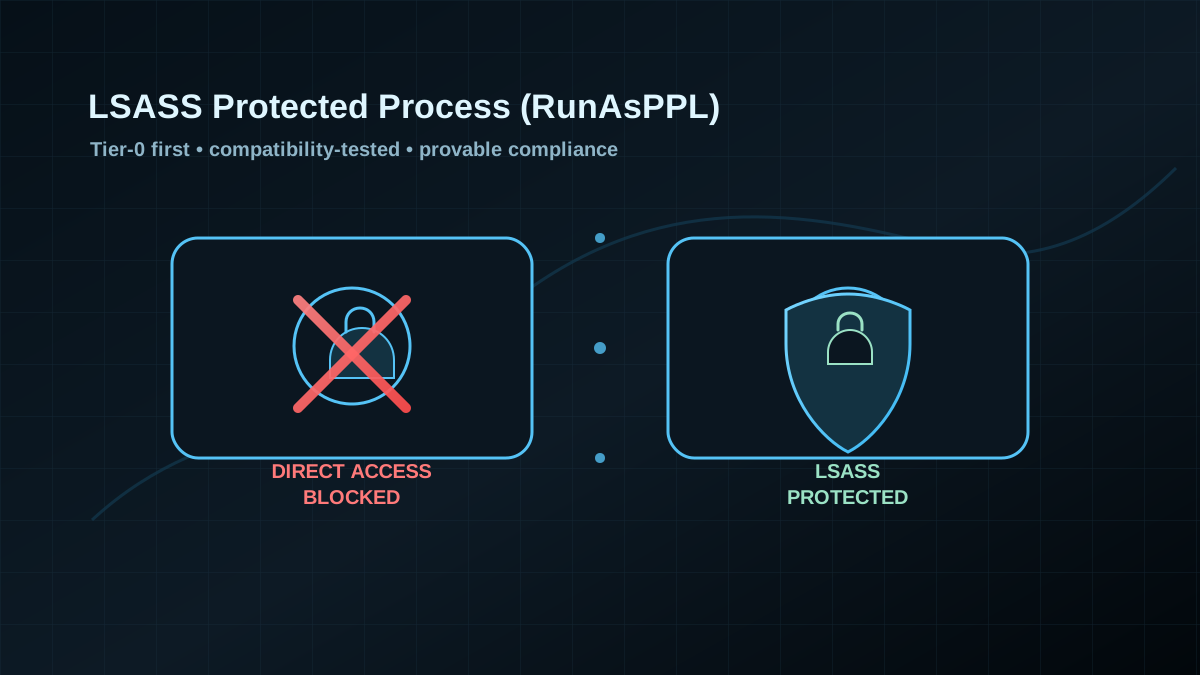
LSASS is a prime target for credential theft. RunAsPPL makes direct access significantly harder — if you handle compatibility, rollout and operations with discipline.
Active DirectoryHardeningWindowsLSASSCredential TheftTiering
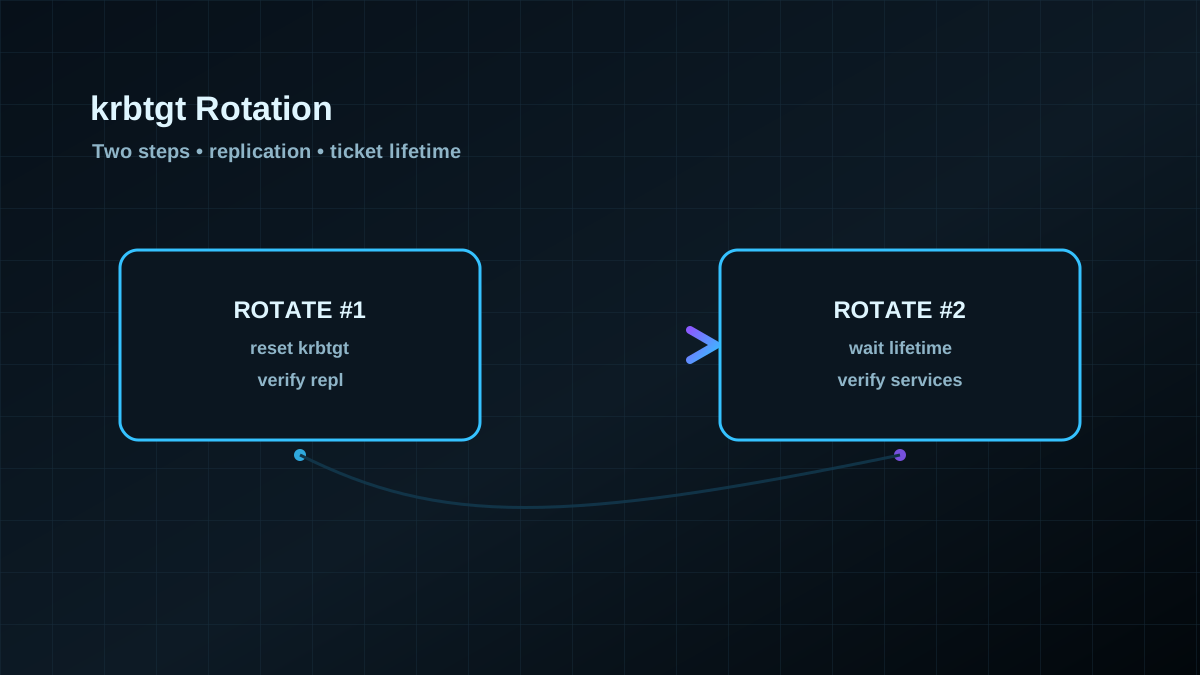
The krbtgt account is the foundation of Kerberos ticket integrity in an AD domain. Rotating it is not a casual “password change” — it’s a controlled operation with replication, ticket lifetimes, and dependencies. This is a practical, low-drama rollout approach, including limits and a project checklist.
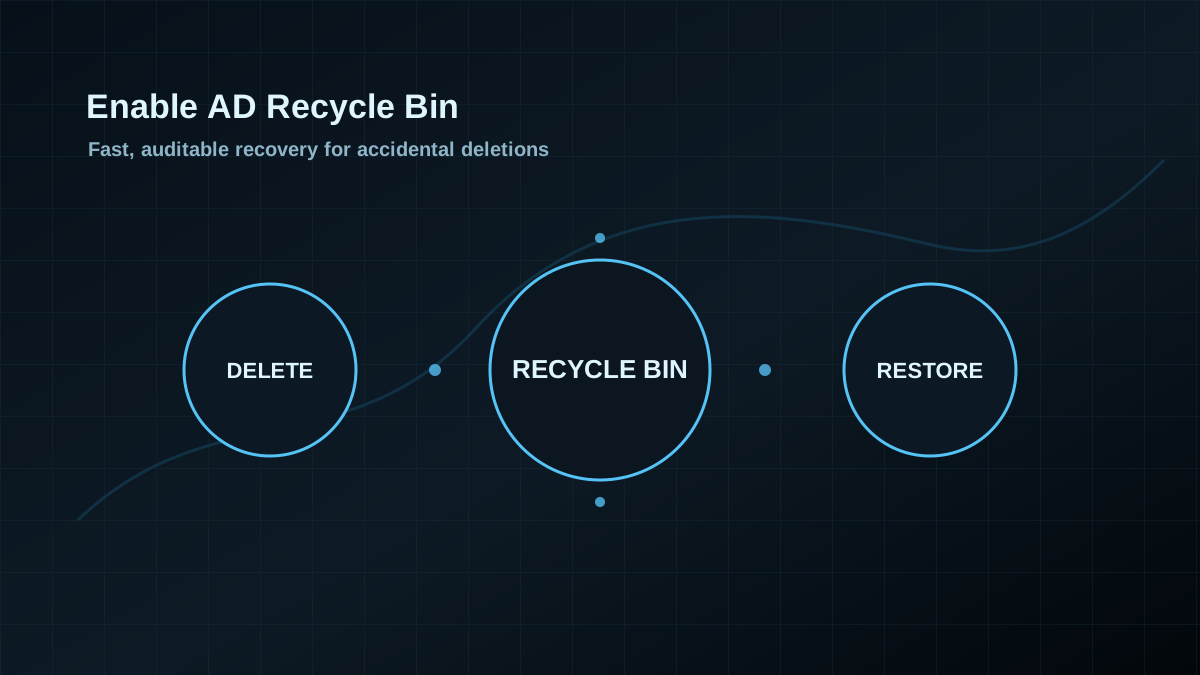
Deleted users, groups, or OUs are a very real operational risk — and classic backup restores are often too heavy for the job. With the AD Recycle Bin you get a pragmatic, auditable restore option, if you roll it out properly.
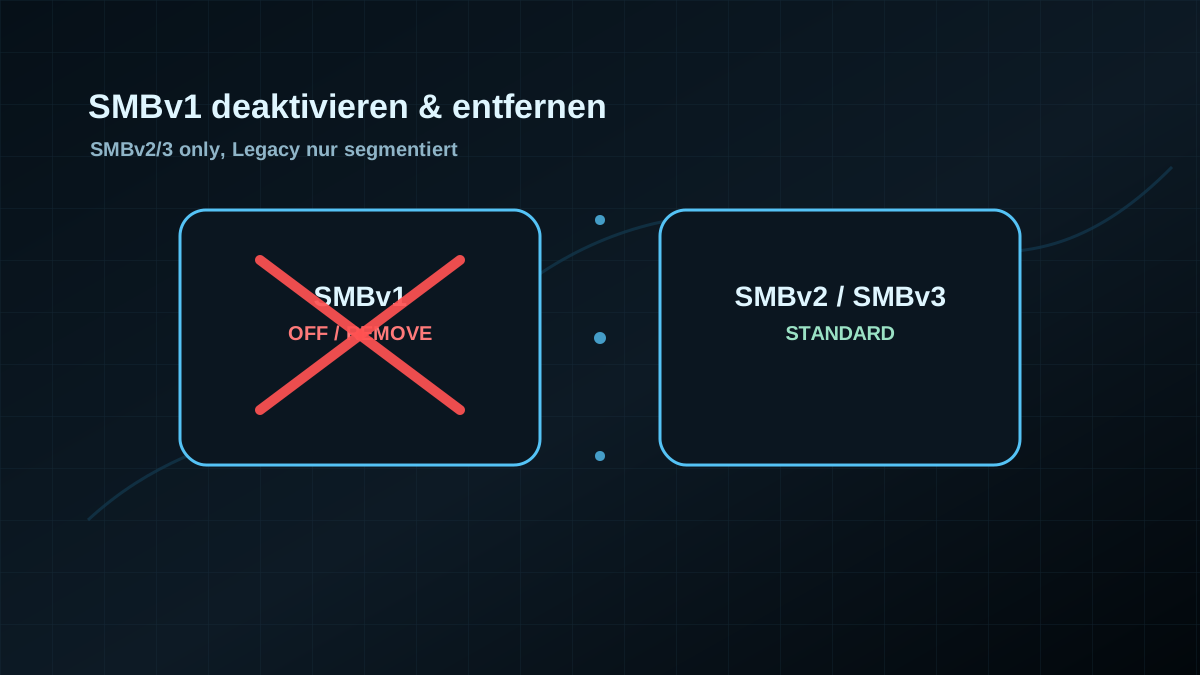
SMBv1 has no place in modern AD environments — yet in practice it’s often still enabled somewhere. This is a controlled, low-drama way to remove SMBv1 from clients, servers, and images without breaking operations.
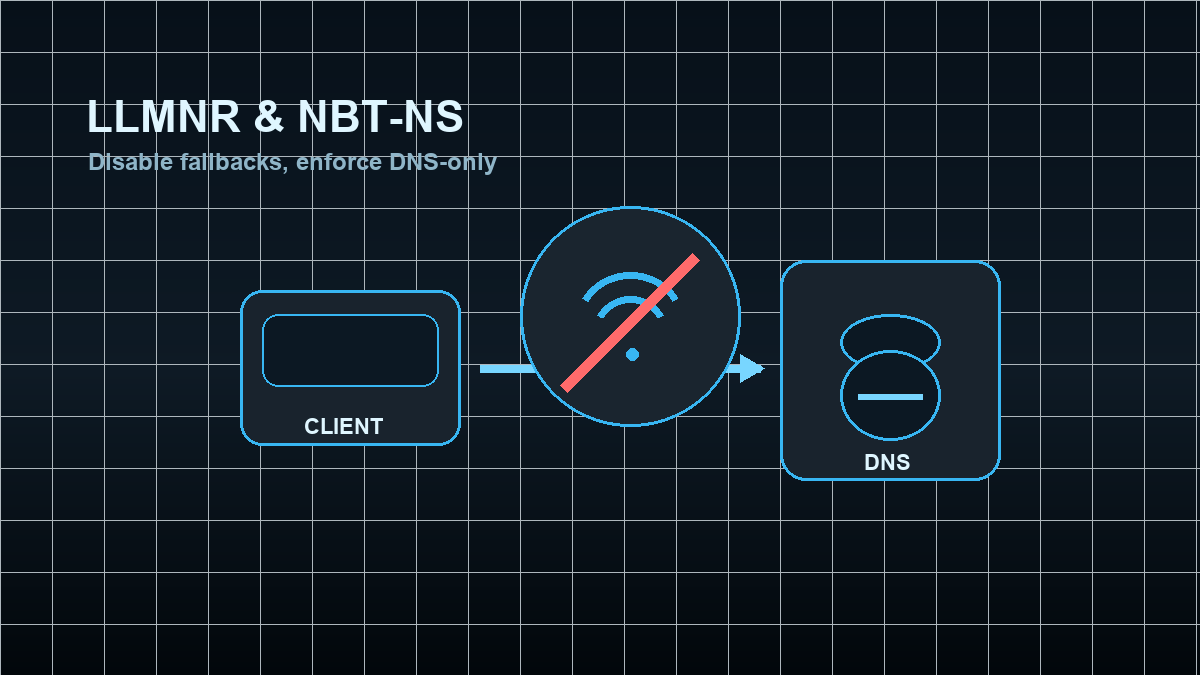
When DNS fails, Windows often falls back to LLMNR or NetBIOS (NBT-NS) — multicast/broadcast instead of authority. That’s unnecessary attack surface and creates confusing authentication noise. Here’s a controlled, project-friendly rollout.
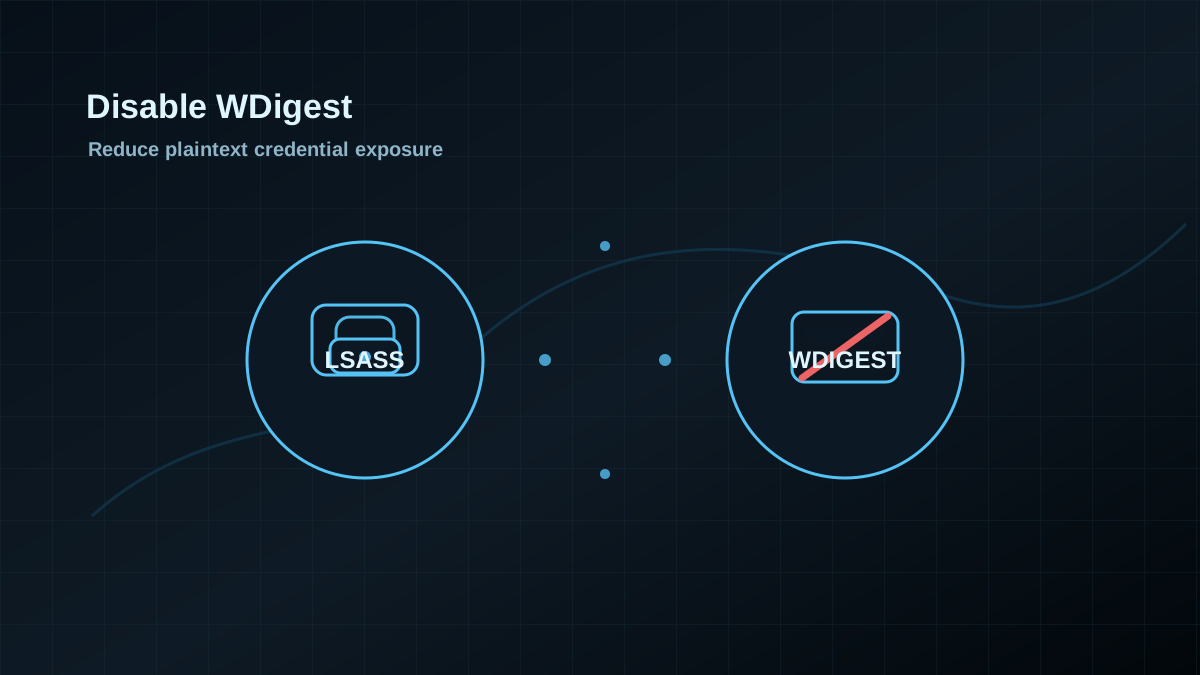
WDigest is a legacy mechanism that can be re-enabled by old images, GPOs, or troubleshooting workarounds. Here’s how to verify the current state, enforce a robust baseline, and keep plaintext passwords out of LSASS.
Domain Controllers are Tier 0. Print services don’t belong there. This is how to disable the Print Spooler safely, handle exceptions, and make the control auditable.
Why AD security should not be treated as a one-off check, but as a prioritized project building block for risk reduction, audit readiness and incident readiness.
For critical-infrastructure environments, remote access is defensible only when identity, segmentation, logging and emergency operations are designed together.